
 By
By 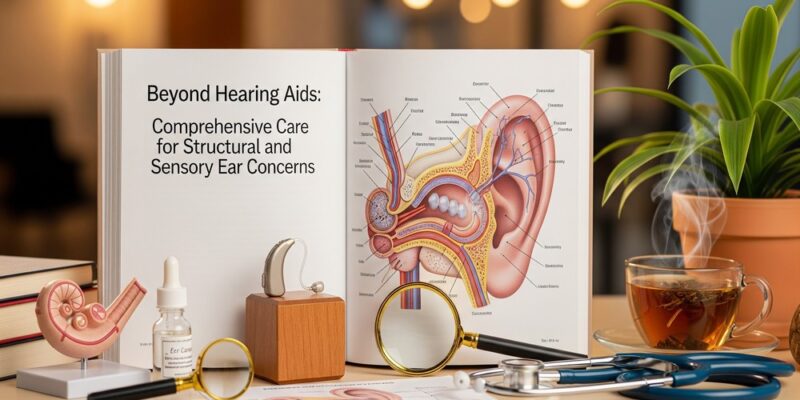
Understanding Ear Health as Both Structural and Sensory
Ear health is often discussed primarily in terms of hearing ability-how well someone can perceive sound, understand speech, or adapt to hearing aids. While hearing function is essential, it represents only one part of a more complex system. The ear is both a sensory organ and a physical structure, meaning that anatomy, nerve function, and surrounding tissues all contribute to how well it works and how it feels.
Structural differences or changes-whether congenital, injury-related, or age-associated-can affect hearing outcomes, comfort, and even self-perception. Issues involving the outer ear, ear canal, or surrounding facial structures may influence sound conduction or create recurring discomfort that interferes with daily life. Addressing these concerns requires a broader view of ear health, one that considers both form and function.
Comprehensive care recognizes that hearing loss, pain, pressure, or asymmetry are not always isolated problems. They may overlap with infection, trauma, or anatomical variation. When care teams coordinate across specialties, individuals benefit from clearer diagnoses and more complete treatment pathways.
Early Symptoms That Signal Broader Ear Concerns
Many ear-related conditions begin subtly. Recurrent earaches, a sensation of fullness, ringing, or mild hearing difficulty may be dismissed as temporary or stress-related. However, these symptoms can indicate underlying issues that deserve early attention. Prompt evaluation can help distinguish between temporary inflammation and more persistent structural or sensory concerns.
Urgent and primary care settings, such as Carolina Urgent Care, often serve as the first point of contact for ear pain, infections, or sudden hearing changes. Early evaluation of ear trauma or infections is especially important for preventing complications that may affect hearing or balance. Timely treatment for earaches or combined eye, ear, or throat issues can reduce inflammation before it interferes with long-term auditory health.
Recognizing when symptoms persist or recur allows patients to move beyond short-term relief toward more targeted evaluation. Early intervention supports not only symptom resolution but also better coordination with specialty providers when needed.
Diagnostic Hearing Evaluations as a Foundation for Care
Accurate diagnosis is essential for understanding the full scope of ear-related concerns. Diagnostic hearing evaluations go beyond basic screening, offering insight into how sound is processed across different frequencies and environments. These assessments help determine whether hearing challenges stem from sensory loss, conductive issues, or a combination of factors.
Providers like Advanced Audiology Care emphasize comprehensive diagnostic hearing evaluations as a foundation for personalized care. These evaluations assess hearing sensitivity, speech understanding, and auditory processing, creating a detailed picture of auditory function. Such information is critical when determining whether hearing aids, medical referral, or further structural evaluation is appropriate.
Diagnostic clarity helps prevent unnecessary delays in care. When hearing challenges are identified early and accurately, individuals can move forward with confidence, knowing that their treatment plan reflects their unique anatomy and sensory needs.
Hearing Aids Within a Broader Treatment Plan
Hearing aids play an important role in supporting communication and quality of life for many individuals. Modern devices are highly adaptable, capable of addressing a wide range of hearing profiles. However, hearing aids are most effective when they are part of a comprehensive care strategy rather than a standalone solution.
At practices such as Advanced Audiology Care, hearing aids are often paired with ongoing support, adjustments, and education. This approach acknowledges that hearing needs evolve over time and that comfort, fit, and auditory clarity depend on both technology and anatomical factors. Hearing protection may also be recommended to preserve residual hearing, particularly for individuals exposed to occupational or recreational noise.
When hearing aids are integrated into a broader plan that considers ear health, lifestyle, and structural factors, individuals experience more consistent outcomes and greater long-term satisfaction.
Structural Ear Concerns and Facial Anatomy
Not all ear-related challenges are sensory. Structural differences or injuries involving the outer ear and surrounding facial anatomy can affect both function and appearance. Conditions such as prominent ears, trauma-related deformities, or reconstructive needs may influence how sound is directed into the ear canal or how devices fit and function.
Specialists like North Texas Facial Plastic Surgery, who perform procedures such as otoplasty and facial reconstruction, address these anatomical considerations. Otoplasty may be pursued for functional, aesthetic, or psychosocial reasons, while facial reconstruction can restore form and symmetry after injury or medical intervention. These procedures often play a role in improving comfort, confidence, and overall ear health.
Structural care does not exist in isolation. When surgical considerations are coordinated with audiologic evaluation, patients benefit from outcomes that support both hearing function and physical well-being.
When Trauma or Infection Requires Coordinated Care
Ear trauma and infections can have lasting effects if not addressed promptly and thoroughly. A sudden blow to the ear, untreated infection, or repeated inflammation may lead to changes in hearing, balance, or tissue integrity. Coordinated care helps ensure that both immediate and long-term needs are addressed.
Facilities like Carolina Urgent Care provide timely treatment for earaches, infections, and related ENT concerns. Early management can reduce pain, prevent spread, and identify when referral to audiology or surgical specialists is necessary. This step is especially important for children, older adults, and individuals with recurring symptoms.
When urgent care providers communicate effectively with audiologists and surgical specialists, patients experience smoother transitions and clearer next steps. This continuity supports recovery while minimizing uncertainty.
Protecting Hearing Across the Lifespan
Hearing protection is an essential yet often overlooked component of ear health. Exposure to loud environments, whether occupational or recreational, can accelerate hearing loss and exacerbate existing conditions. Preventive strategies help preserve hearing and reduce the need for more intensive intervention later.
Audiology providers such as Advanced Audiology Care often include hearing protection recommendations as part of comprehensive care. Custom ear protection, education on safe listening practices, and regular monitoring support long-term auditory health. Prevention becomes especially important for individuals already managing structural or sensory ear concerns.
Protecting hearing is not about restriction-it is about preserving function and independence across life stages. Preventive care empowers individuals to remain engaged in their environments without compromising long-term health.
Why Integrated Ear Care Improves Outcomes
Fragmented care can leave gaps in diagnosis and treatment, particularly when sensory and structural concerns overlap. Integrated ear care brings together urgent evaluation, diagnostic audiology, and structural expertise to address the full spectrum of ear health needs.
When providers collaborate, treatment plans become more precise and adaptable. A patient receiving care for recurrent infections may also benefit from a hearing evaluation, while someone pursuing structural correction may require ongoing audiologic monitoring. This coordinated approach reduces redundancy and supports informed decision-making.
Integrated care also respects the patient experience. By acknowledging the physical, sensory, and emotional dimensions of ear health, care teams help individuals feel supported rather than rushed through isolated solutions.
A Whole-Person Approach to Ear Health and Hearing
Ear health extends far beyond the question of whether someone needs a hearing aid. It encompasses anatomy, sensory processing, protection, and timely medical attention. When these elements are addressed together, individuals receive care that aligns with how the body truly functions-interconnected and adaptive.
Comprehensive ear care recognizes that hearing challenges may coexist with structural differences or medical conditions. By integrating diagnostic evaluation, urgent care, and specialized structural expertise, individuals are guided through a clearer, more compassionate care journey.
Ultimately, supporting ear health is about preserving connection-to sound, to communication, and to self-confidence. When care pathways honor both structure and sensation, healing becomes not just more effective, but more humane.




Comments